Skip to content


What Are the Rituals, Gatherings and Community Spaces of Goths?
Goth community life runs on small recurring habits, regular club nights, and online spaces, with the big festivals as the visible tip of something that mostly happens at a much smaller scale. Academic research into the goth scene backs this up directly: belonging in goth culture comes from sustained involvement in local club nights, many running weekly since the 1980s, with large festivals sitting on top as a separate and less frequent layer. The rituals are personal. The gatherings are local. The community spaces are wherever goths happen to be, online or off - and anyone assuming goth community life is mainly about Whitby and Wave-Gotik-Treffen has missed most of it.
Key Takeaways
- Goth "rituals" are mostly personal and aesthetic - getting ready, listening habits, decor - not occult or religious by default.
- Regular goth nights at local clubs are the backbone of the community, not the big annual festivals.
- Online spaces (Discord, forums, TikTok) now do a lot of the work that used to happen only in clubs.
- Goth gatherings are generally inclusive by design, with strong informal norms around respect and consent.
- Annual festivals like Whitby Goth Weekend and Wave-Gotik-Treffen sit on top of this everyday structure - they're the exception, not the rule.
What Counts as a Goth "Ritual"?
A goth ritual is a personal or aesthetic habit, not a magical or religious practice. Getting ready before a night out, listening to a specific album on a low day, lighting a candle while reading - these count as ritual in the everyday sense: repeated, meaningful, and done on purpose.
The word does a lot of unhelpful work here, mostly because people hear "goth" and "ritual" in the same sentence and assume circles drawn on the floor. Occult ritual - the kind involving invocations and specific magical intent - is a real and separate thing, and most goths have never done it. Some have. Goth and occultism overlap at the edges, particularly in sub-genres like nu goth, but goth itself has never been a religion, and treating it as one says more about the person doing the assuming than about goths themselves. If you want the actual mechanics of occult rituals, that's a different article entirely. This one is about the rituals goths actually do, which mostly involve eyeliner, a playlist, and getting to the club on time.
What Are the Main Types of Goth Gatherings?
Goth gatherings fall into three main categories: regular club nights, smaller meet-ups, and live music events. Each draws a different crowd and asks a different level of commitment from the people turning up.
Club nights. Weekly or monthly goth nights at local venues are the most consistent form of gathering, and arguably the only one that actually matters week to week. They're where most goths socialise - not at a festival three hours away, but at a club fifteen minutes from home, on a night that happens whether or not anyone famous is playing. A scene that only existed once a year wouldn't really be a scene.
Meet-ups. Smaller, often daytime gatherings - picnics, market stalls, photo walks, themed coffee mornings. These are more accessible than club nights by design, since they don't require staying out past midnight or talking your way past a bouncer in eight-inch platforms.
Concerts and live music. Gigs by goth, darkwave, and post-punk bands draw crowds that overlap heavily with club night regulars, and often double as informal meet-ups before and after the show.
Annual festivals - Whitby Goth Weekend, Wave-Gotik-Treffen, M'era Luna - are the largest and most photographed gatherings, but they're a small fraction of how often goths actually gather. They're goth culture's highlights reel, not its daily diet. This one is about everything that happens in between.
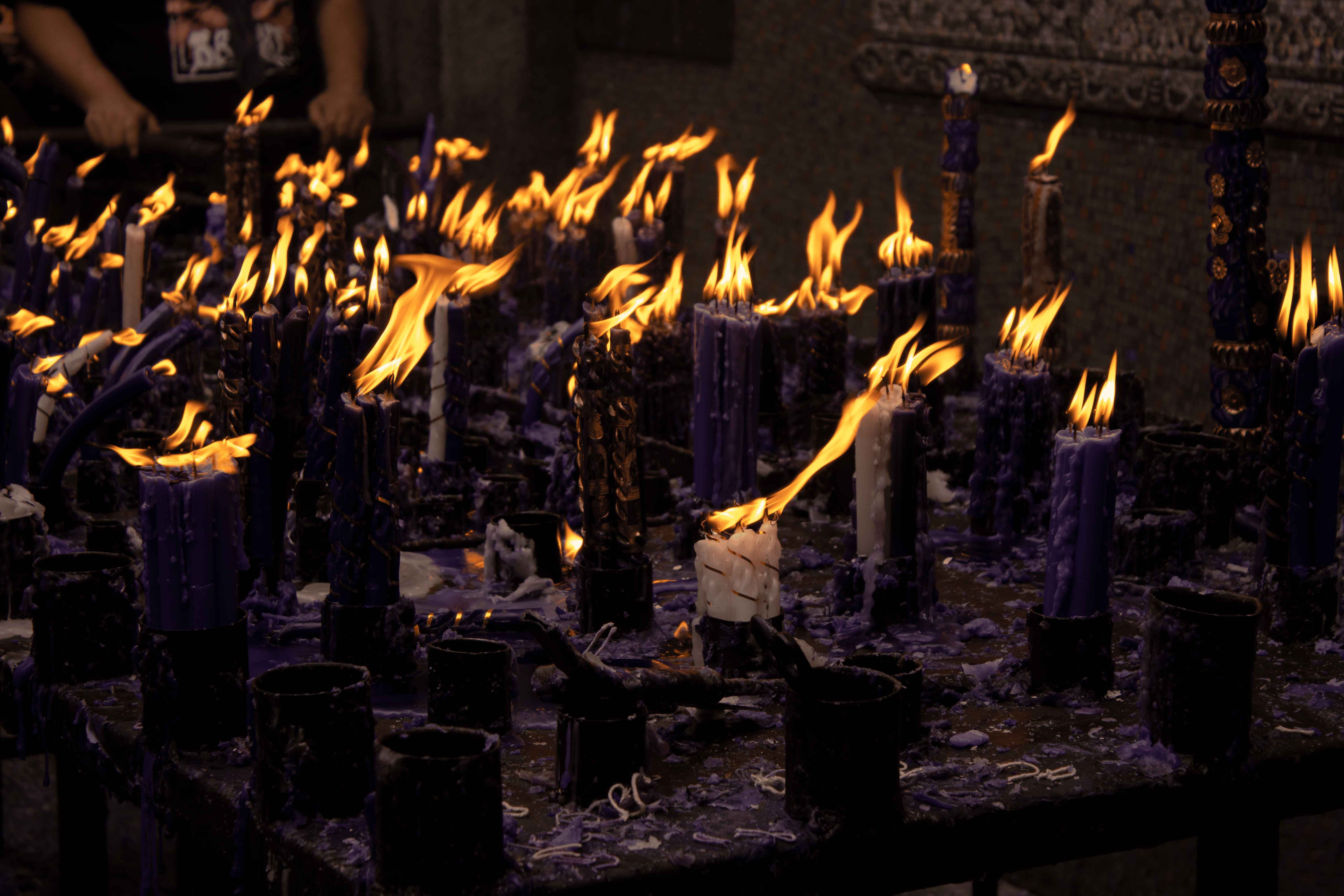
Photo by Ángel León Lara from Pexels: https://www.pexels.com/photo/large-number-of-candles-burning-on-a-grave-18690546/
What Happens at a Typical Goth Club Night?
A typical goth night runs on a DJ set spanning trad goth, darkwave, EBM, and industrial, with a dress code that's encouraged rather than enforced. Doors open, the music builds through the night, and the dancing tends to be more individual than coordinated - goth dancing is famously not a team sport.
Dress varies more than outsiders assume. Some attendees arrive in full Victorian mourning wear. Others turn up in a black T-shirt and jeans, and nobody treats this as a scandal. The unwritten rule is effort over compliance - nobody is checking outfits at the door, but looking like you tried earns more respect than looking like you wandered in by accident.
Etiquette tends to be informal but real: respect personal space on the dance floor, don't touch anyone's outfit without asking, and don't assume someone's appearance is an invitation for comment. Most of this is unspoken because, frankly, it shouldn't need spelling out to begin with.
Where Do Goths Gather Online?
Goths gather online through Discord servers, dedicated forums, and platforms like TikTok and Instagram, where local meet-ups get organised and global community happens between in-person events. Online space has become as central to goth community as the physical club, and for plenty of goths it's now the primary one.
Forums were the earlier version of this - text-based communities trading playlists, outfit advice, and event listings before social media became the default. Discord has largely taken over that role for active organising: local servers coordinate meet-ups, share venue recommendations, and post photos from last week's club night, usually within minutes of the lights coming up.
TikTok and Instagram do a different job. They're less about organising and more about visibility - aesthetic content, outfit posts, and the kind of casual exposure that introduces new people to the subculture without them ever setting foot in a goth club. A lot of goth's recent growth has come through exactly this route, which is part of why the occult imagery of nu goth spreads faster online than it ever would through word of mouth. Whether that counts as the subculture growing or just its aesthetics getting borrowed is a separate argument, and a fair one.
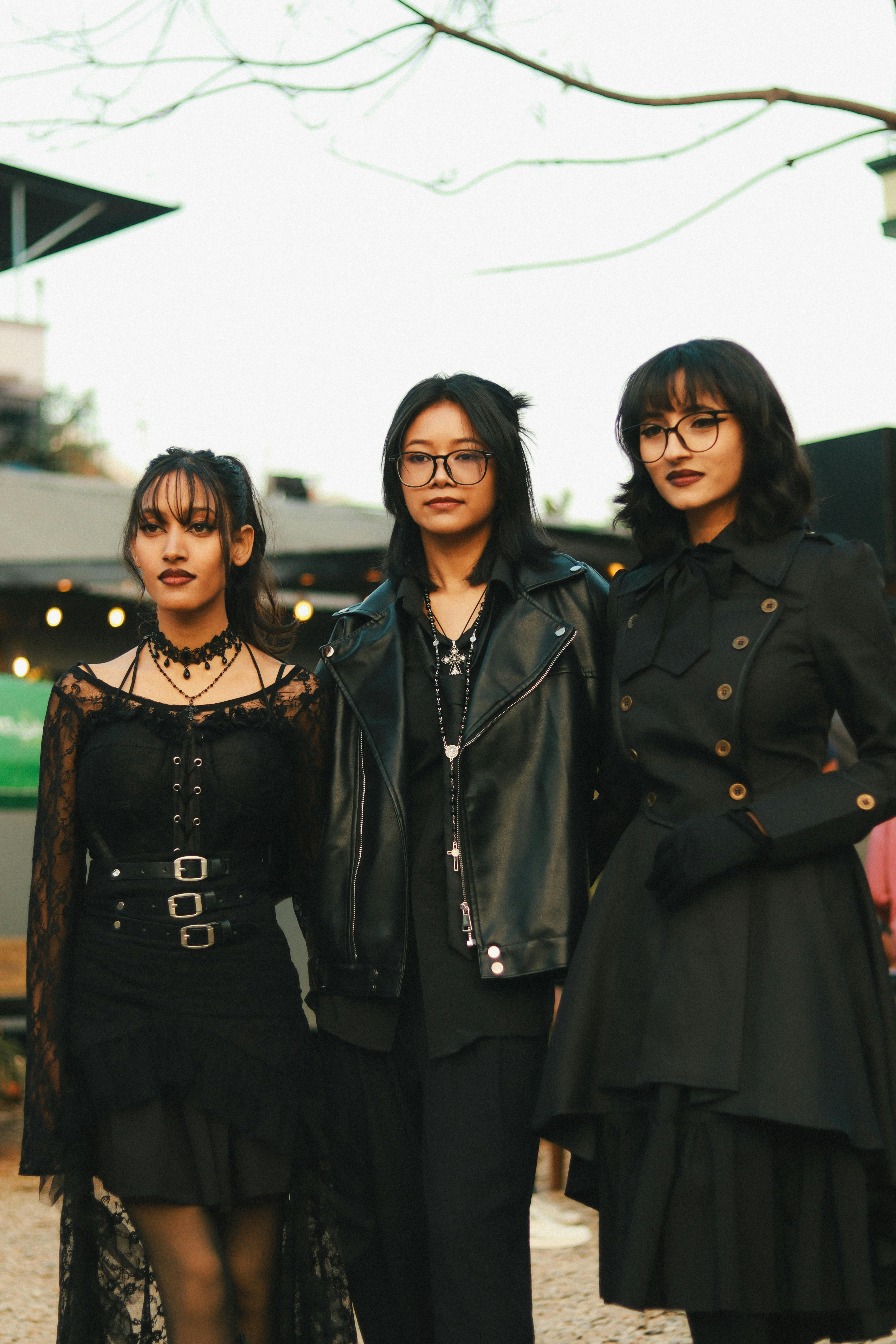
Photo by Prayatna Maharjan from Pexels: https://www.pexels.com/photo/trio-in-gothic-fashion-outdoors-29897874/
What Role Do Personal and Aesthetic Rituals Play?
Personal rituals - getting ready, music listening habits, decorating personal space - are where most goths actually live out their identity day to day, far more than at any single event or club night. These are small, repeated, and usually done alone.
Getting ready before a night out is itself a ritual for a lot of goths: the order of make-up, the specific album, the time taken that a five-minute changeover wouldn't allow. The point isn't speed. The point is that doing it properly is part of being goth, not just preparation for it.
Home decor follows a similar pattern. Candles, dark furnishings, memento mori imagery, and Victorian-inspired objects show up in goth living spaces whether or not the person ever sets foot in a club. This is aesthetic practice, not religious devotion - the imagery gets borrowed because it's evocative, not because anyone's praying to it.
How Do Goth Spaces Stay Inclusive?
Goth spaces stay inclusive through strong informal norms around respect, consent, and acceptance, enforced socially rather than through any official rulebook. There's no governing body, no membership card, and no committee deciding who's goth enough to be there. The standards exist because the community enforces them on itself, which is a harder and more honest way to do it than any code of conduct printed on a poster.
This shows up practically: most goth nights and meet-ups have a default zero-tolerance approach to harassment and a general lack of interest in body type, age, or how "correctly" someone is dressed. The acceptance of LGBTQ+ identities specifically has been documented by researchers studying the scene, who found same-sex affection between goths drew no particular notice in goth clubs even when the wider society of the time was less relaxed about it. None of it is written down anywhere official. It gets passed on the way most subcultural norms are - by example, repeated until newcomers absorb it without being told.
The age range is wider than outsiders expect, too. Goth nights regularly include people in their teens through their fifties and beyond, and sociologists who study the scene have specifically noted goth's unusual staying power as people age, rather than the usual youth-culture drop-off once participants hit their thirties. Nobody ages out of liking The Cure.
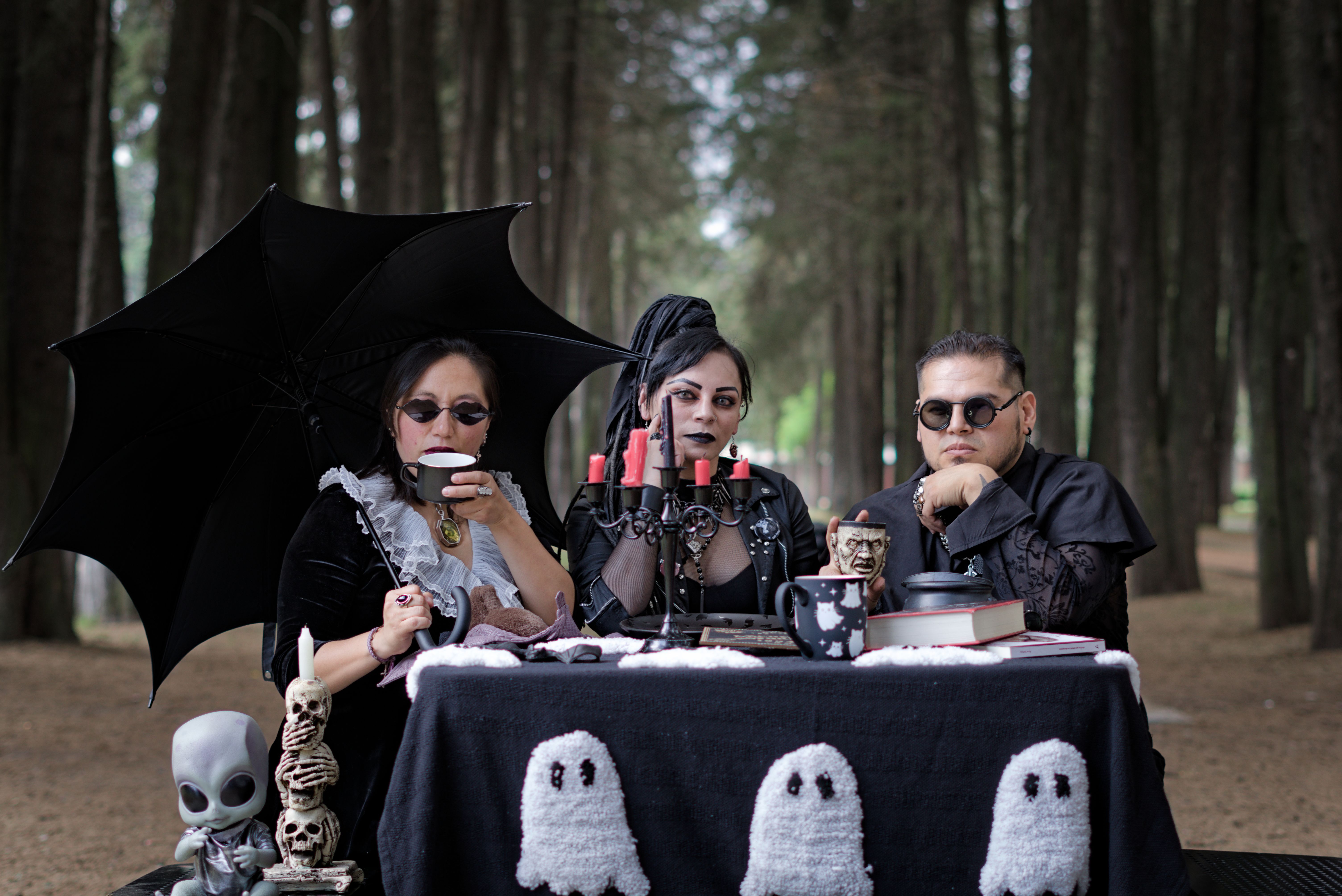
Photo by James Bat Barrera from Pexels: https://www.pexels.com/photo/gothic-picnic-in-enchanted-forest-setting-37592151/
FAQ
Are goth gatherings religious? No. Goth gatherings are social and cultural, not religious. The dark aesthetic and occasional occult-adjacent imagery are stylistic choices, not signs of shared belief. Individual goths hold whatever religious or non-religious views they like, and most gatherings have no spiritual content at all.
Do you need to dress goth to attend a goth club night? No, but it helps you fit in socially. Most goth nights welcome anyone respectful of the space, regardless of how "goth" their outfit is, though dressing the part tends to make conversation easier and shows you've made an effort rather than wandered in from the high street by mistake.
What's the difference between a goth meet-up and a goth club night? A meet-up is usually a smaller, often daytime gathering - a picnic, market stall, or photo walk - while a club night is an evening event built around a DJ set and dancing. Meet-ups tend to be more accessible since they don't require a licensed venue or staying out late.
Can teenagers attend goth gatherings? Some, yes - many meet-ups and daytime events are open to all ages, though club nights are usually restricted by the venue's own licensing rules rather than anything specific to goth culture. Age limits depend on the venue, not the subculture.
Is online community a real part of goth culture, or just a substitute for the real thing? Online community is a genuine part of goth culture in its own right, not a lesser substitute. For goths without a local scene, Discord servers and forums are often the primary community, and they regularly translate into in-person meet-ups once enough local members connect.
Do goth rituals involve magic or witchcraft? For most goths, no. Goth rituals are aesthetic and personal - routines around getting ready, listening to music, or decorating a space. Some individual goths also practise witchcraft or other occult traditions, but that's a personal overlap, not a requirement of being goth.
How has the internet changed goth community spaces? The internet has shifted a lot of community-building from physical clubs to online platforms, making goth culture far more accessible to people without a local scene. It has also sped up how sub-genres spread, since aesthetic trends on TikTok and Instagram now reach new audiences faster than word of mouth ever did - for better and occasionally for worse.
Whether you're heading to your first local goth night or just building the wardrobe for it, our gothic patches, goth beanies, and gothic keyrings are an easy way to show up looking like you made the effort.