Skip to content

What Do Wiccans Believe About Life After Death?
Wiccans do not all believe the same thing about life after death.
That needs to be said first, because people often expect religions to have one neat answer. One rule. One official map of the afterlife. Wicca does not work like that.
Wicca has no pope. No single central church. No universal holy book that every Wiccan must obey. There are initiatory covens, solitary practitioners, traditional lines, eclectic groups, and people who practise in very personal ways. So, while there are common Wiccan ideas about death, there is no single afterlife doctrine that every Wiccan must accept.
Still, some themes come up again and again. Many Wiccans see death as part of nature’s cycle. Many believe in reincarnation. Many speak of the Summerland, a peaceful place of rest between lives. Many honour ancestors, especially at Samhain. Most do not believe in Heaven and Hell in the Christian sense.
The simplest answer is this: many Wiccans believe life, death, rest, and rebirth form a sacred cycle.
That is the centre of it.
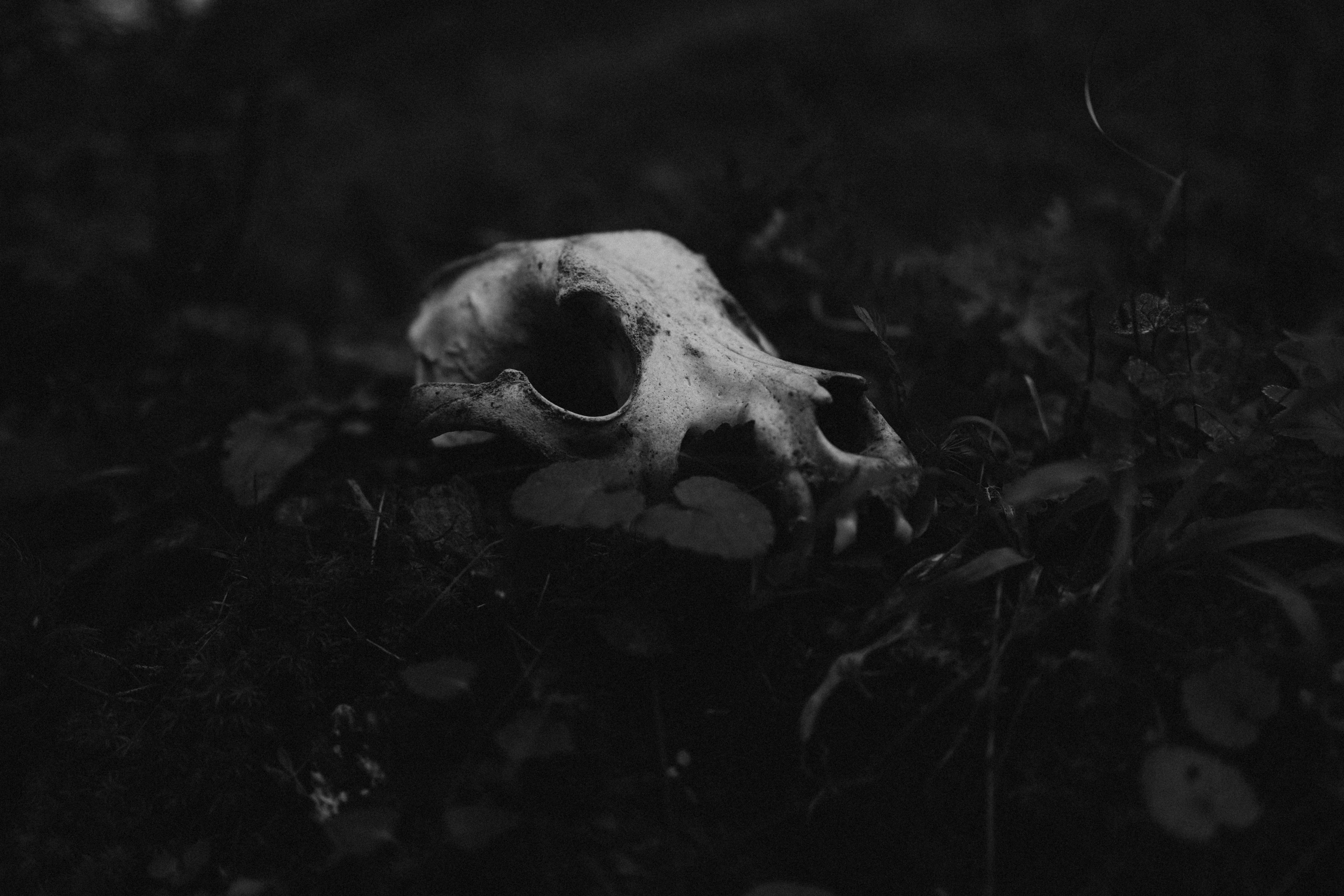
Photo by Anastasiia Chaikovska from Pexels: https://www.pexels.com/photo/a-black-and-white-photo-of-a-skull-in-the-grass-27793378/
Death Is Part of Nature
Wicca is a nature-focused modern Pagan religion. Its rituals often mark the seasons, the moon, the turning of the year, and the patterns of growth and decay.
That nature focus shapes how many Wiccans think about death.
In nature, death is not outside the system. It is part of the system. Leaves fall. Plants rot. Animals die. Seeds rest in the dark. New growth comes later. Winter is not a mistake. Decay is not pointless. The dead feed the living.
Wicca often looks at death through that pattern. Life does not move in a straight line from birth to success to death to judgement. It turns. It returns. It changes form.
That does not mean death is easy. It does not mean grief is small. It does not mean Wiccans shrug at loss and say, “It is natural,” as if that fixes anything. Death hurts because love is real. But Wicca often gives death a place inside a larger rhythm rather than treating it as pure failure.
That is one of Wicca’s strengths. It can look at endings without pretending they are not endings.
Is There One Wiccan Belief About the Afterlife?
No.
There are common beliefs, but no compulsory afterlife creed.
Some Wiccans believe strongly in reincarnation. Some believe in the Summerland. Some believe the dead remain close to the living for a time. Some believe ancestors can guide and protect their descendants. Some are unsure. Some see afterlife language as symbolic rather than literal.
That variation is important. It stops us from speaking as if every Wiccan has signed the same theological contract.
Traditional Wicca may pass down teachings about death through coven training, ritual, and initiation. Eclectic Wicca may draw on books, personal experience, meditation, spirit work, mythology, or wider Pagan ideas. Solitary Wiccans may build their views through practice rather than formal instruction.
This can be frustrating for people who want a neat answer. But it is honest. Wicca is not a religion built around one fixed afterlife system. It is more accurate to talk about repeated themes: cycle, rebirth, rest, ancestors, and connection.
The Summerland
The Summerland is one of the best-known Wiccan ideas about life after death.
In many Wiccan and modern Pagan discussions, the Summerland is described as a peaceful spiritual place where the soul rests after death. It is often imagined as beautiful, calm, green, warm, and free from ordinary pain. Some Wiccans believe souls meet loved ones there. Some believe the soul heals there. Some believe it is a resting place before reincarnation.
The Summerland is not just “Wiccan Heaven”.
That comparison is too simple. In Christian theology, Heaven is often understood as eternal union with God, while Hell is eternal separation or punishment. Wiccan ideas about the Summerland usually work differently. The Summerland is often tied to rest, renewal, and return, not final judgement.
Some Wiccans believe in it literally. Others treat it as poetic language for peace after death. Some do not use the term at all.
My view is that the Summerland works best when it is not over-explained. Once people start drawing strict maps of the afterlife, the idea loses power. The point is not to turn death into a travel brochure. The point is to say that death may include rest, healing, and continuation.
That is enough.
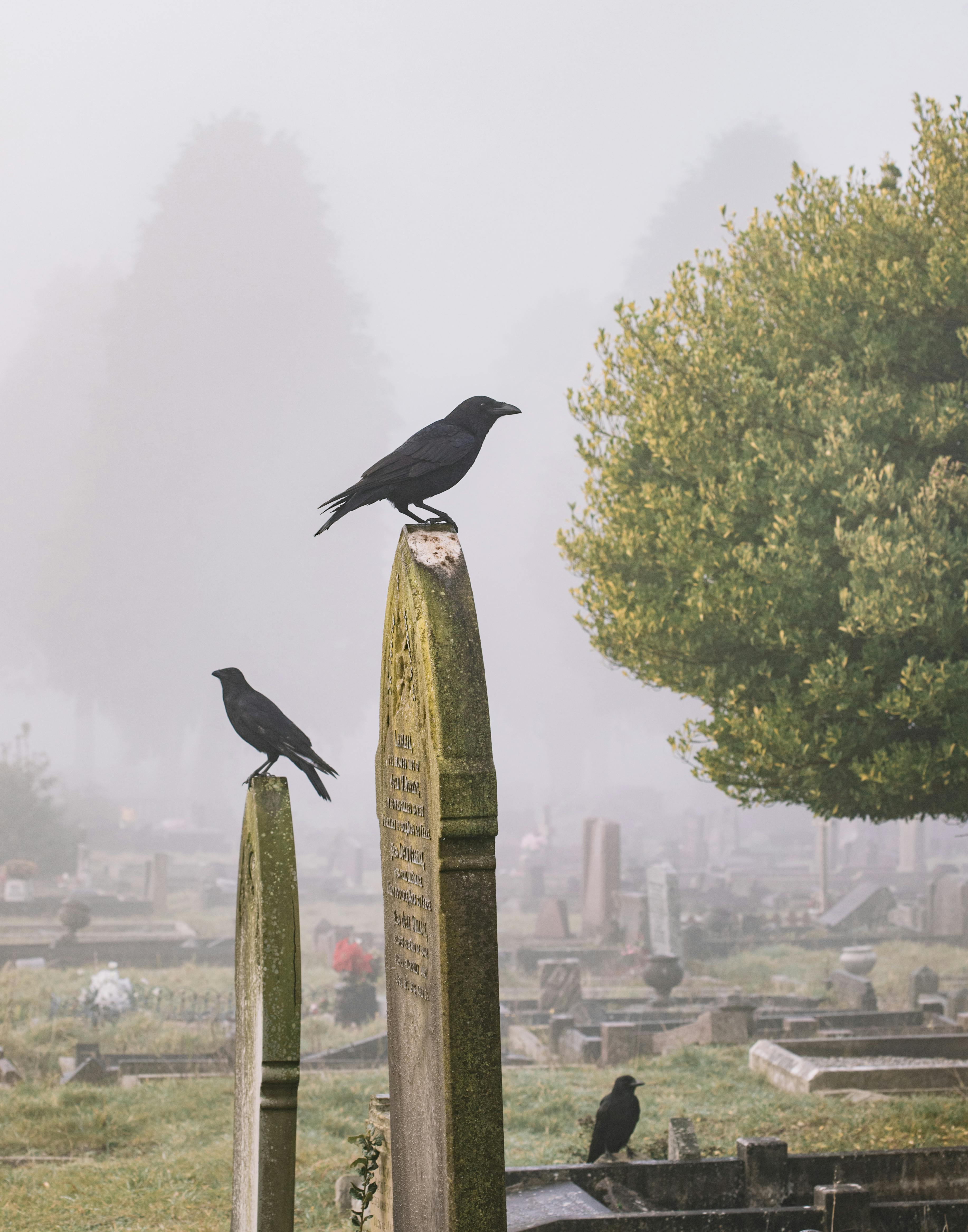
Photo by Ellie Burgin from Pexels: https://www.pexels.com/photo/black-birds-on-tomb-stones-3498985/
Reincarnation in Wicca
Reincarnation is very common in Wiccan belief.
Reincarnation means that the soul, spirit, or deeper self returns to life in a new body after death. The details vary. Some Wiccans believe the soul returns many times to learn and grow. Some believe people may reincarnate with familiar souls. Some believe a soul may choose, or be drawn, into a new life when ready. Some believe reincarnation is less about reward and punishment and more about experience.
This fits Wicca’s wider pattern. The moon waxes and wanes. The year turns. Plants die and return. The Goddess and God, in many Wiccan myths and rituals, are linked with birth, growth, death, and renewal. Reincarnation fits that circular way of seeing existence.
It is also worth saying what Wiccan reincarnation is not.
It is not always the same as Hindu or Buddhist teachings about rebirth. Wiccans may borrow the word “karma”, but they do not always mean it in the same way those older religions do. In Wicca, reincarnation is often framed through nature, soul growth, love, and return.
That does not make it better or worse. It makes it different.
The Cycle of Life, Death, and Rebirth
The cycle is central.
Wicca often marks the Wheel of the Year, a set of seasonal festivals that follow the pattern of light, dark, growth, harvest, death, and renewal. Samhain marks death, the ancestors, and the darkening year. Yule marks the return of light. Spring brings growth. Summer brings fullness. Autumn brings harvest and decline.
That yearly rhythm gives many Wiccans a way to think about their own mortality.
You are born. You grow. You change. You love. You lose. You age. You die. Something of you may continue. Something of you may return. Something of you remains in memory, blood, land, influence, story, and spirit.
In some Wiccan traditions, the God is symbolically born, grows, dies, and is reborn through the Wheel of the Year. The Goddess is often linked with birth, death, transformation, and continuity. Not every Wiccan reads this myth literally, but it gives ritual shape to a hard fact: death is part of life.
This is where Wicca can be very direct. It does not need to hide death behind polite language. The old year dies. The body dies. The harvest is cut. The light fades.
Then something changes.
That does not erase grief. It places grief inside a pattern.
Ancestors and the Dead
Many Wiccans honour ancestors.
This does not always mean worship. Ancestor honouring can mean remembering the dead, speaking their names, lighting candles, keeping photographs, making offerings, telling family stories, or setting a place for them in ritual.
For some Wiccans, ancestors are active spiritual presences. They may be asked for wisdom, protection, strength, or guidance. For others, ancestor work is more about memory and gratitude. Both approaches exist.
Samhain is the main time of year when many Wiccans focus on the dead. It is often treated as a time when the boundary between the living and the dead feels thinner. This does not have to be taken as a literal wall opening. It can also mean that memory, grief, and spiritual attention become sharper.
Ancestor work can be beautiful, but it should not be sentimentalised. Not every ancestor was kind. Not every family line is safe. Some dead are best remembered with distance. Wicca has room for honouring the beloved dead, but it should also have room for honest boundaries.
In my opinion, good ancestor practice is not blind loyalty to blood. It is careful remembrance. Honour what deserves honour. Heal what can be healed. Do not pretend harm was holy just because it is old.

Photo by Armin Forster from Pexels: https://www.pexels.com/photo/gray-skull-in-close-up-shot-7006596/
Spirits, Ghosts, and Communication with the Dead
Some Wiccans believe communication with the dead is possible.
This may happen through dreams, divination, ritual, meditation, signs, mediumship, or sudden moments of presence. Some Wiccans use tarot, pendulums, scrying, candles, or quiet prayer-like speech to connect with those who have died.
But Wicca is not the same as Spiritualism.
Spiritualism is a separate religious and cultural movement with its own history, centred strongly on communication with spirits through mediums. Some Wiccans may also be Spiritualists, or may borrow ideas from Spiritualism, but the two are not identical.
Care matters here. Serious spirit work should involve boundaries. Not every strange feeling is a message. Not every dream is a visitation. Not every “sign” should be trusted without thought. Grief can make people vulnerable, and anyone who exploits grief for status or money is doing something ugly.
Responsible Wiccans tend to treat the dead with respect, not as entertainment. That is how it should be.
Karma, Consequence, and the Soul
Many Wiccans believe actions have consequences beyond the obvious.
This may be expressed through karma, return, balance, cause and effect, or moral responsibility. The language differs. The idea is that what you do matters, and your actions shape your life, your spirit, and your relationships.
The Wiccan Rede is often summarised as a call to act freely while avoiding harm. Wiccans interpret it in different ways, and not every witch follows it. But within Wicca, it remains one of the best-known ethical ideas.
Some Wiccans connect consequence with reincarnation. A soul may learn across lives. Harm may need to be faced. Patterns may repeat until they are understood. Other Wiccans reject neat moral accounting and see life as more complicated than that.
I think the second view is healthier. The idea that every suffering person must have “earned” pain in a past life is cruel. It turns compassion into blame. A serious Wiccan view of consequence should make people more responsible, not more judgemental.
Ethics should sharpen mercy. If they kill mercy, something has gone wrong.
Do Wiccans Believe in Heaven and Hell?
Most Wiccans do not believe in Heaven and Hell in the traditional Christian sense.
That does not mean Wiccans reject all afterlife belief. Many simply do not see the afterlife as a final split between eternal reward and eternal punishment. Wiccan ideas are usually more focused on cycle, rest, return, learning, and spiritual connection.
This matters because Wicca does not usually teach eternal damnation for disbelief. It does not teach that a person is doomed forever for following the wrong religion. It does not usually frame death as a courtroom where one god sends souls to permanent bliss or permanent torture.
Some individual Wiccans may carry mixed beliefs from earlier religious backgrounds. People do not become blank slates when they change religion. A Wiccan raised Christian may still think in Christian images. Another may reject those images completely. Another may blend old and new ideas in a private way.
But as a general rule, Wicca does not centre Heaven and Hell.
That is one of its clearest differences from many forms of Christianity.
Wiccan Death Rituals and Funerals
Wiccan funerals and death rites vary.
A Wiccan funeral may include candles, flowers, incense, poems, chanting, music, blessings, invocations, seasonal symbols, or a ritual circle. It may call on the Goddess, the God, the elements, ancestors, guardians, or beloved dead. It may focus on release, safe passage, gratitude, remembrance, and peace.
Some rites are formal. Some are quiet and private. A coven may gather to honour one of its members. A solitary Wiccan may hold a small ritual at home, in a garden, by water, or in woodland. Family members may adapt the rite depending on who is present and what is legally possible.
The best Wiccan funerals I have seen described do not try to explain death away. They name the loss. They honour the body. They speak to the dead. They support the living. They let people cry.
That is important. Any death rite that skips grief has failed.
Ritual is not there to make mourners perform spirituality. It is there to give grief a container.
Samhain and the Thinning Veil
Samhain is one of the most important Wiccan festivals connected with death.
It is usually observed around 31 October, though exact practice varies. In Wicca and wider modern Paganism, Samhain is commonly linked with the dead, ancestors, endings, divination, and the dark half of the year.
The phrase “the veil is thin” is often used at Samhain. It means the boundary between the living and the dead is felt to be more open, more tender, or more easily crossed.
Some Wiccans take that literally. Others treat it as ritual poetry. Either way, Samhain gives people permission to remember the dead properly. In a culture that often rushes grief, that matters.
Samhain is not simply “Wiccan Halloween”. The two are culturally linked, and they share seasonal roots and symbols, but they are not the same thing. Halloween in popular culture is often about costumes, horror, sweets, and entertainment. Samhain, for many Wiccans, is religious. It can be solemn, intimate, and emotionally serious.
It can also be joyful. Remembering the dead does not always mean sitting in darkness. Some people cook family recipes, tell stories, laugh at old jokes, and welcome the beloved dead with warmth.
That feels right to me. The dead were people. They deserve more than gloom.
Grief in Wiccan Belief
Wiccan beliefs can help some people grieve.
Reincarnation can offer hope that death is not the end. The Summerland can offer an image of rest. Ancestor honouring can keep love active. Seasonal ritual can remind mourners that grief changes shape over time.
But belief does not remove pain.
A Wiccan who believes in reincarnation can still be devastated by death. A person who believes their loved one rests in the Summerland can still miss their voice, their face, their habits, their ordinary presence in the room. Spiritual belief may give meaning, but it does not cancel human sorrow.
That is why I dislike shallow spiritual comfort. Telling someone “they are still with you” may be true in some sense, but it can also sound like an order to stop grieving. People need room to hurt.
The better Wiccan answer is not “death is fine”. It is “death belongs to the cycle, and grief belongs there too”.
That is more honest.
How Wiccan Beliefs Differ from Other Pagan Views
Wiccan beliefs about death sit inside wider modern Pagan discussion, but they are not the same as all Pagan afterlife beliefs.
Paganism is broad. Different Pagan paths may look to different old cultures, myths, gods, and afterlife images. A Heathen may think about Hel, Valhalla, ancestors, mound-dead, or other Norse-linked ideas. A Hellenic Pagan may look to Greek ideas of Hades, the Isles of the Blessed, heroic cult, or proper rites for the dead. A Kemetic Pagan may draw from Egyptian ideas about the soul, judgement, offerings, and the blessed dead.
Wicca has its own common themes: reincarnation, the Summerland, the Wheel of the Year, Samhain, and the cycle of life, death, and rebirth.
So no, “Pagan afterlife belief” is not one thing.
Wicca is part of modern Paganism, but it does not speak for all Pagans.
Common Misunderstandings
“All Wiccans Believe the Same Thing About Death”
False.
Many Wiccans share themes, but there is no single required doctrine. One Wiccan may believe literally in reincarnation and the Summerland. Another may see them as symbols. Another may be uncertain.
That uncertainty is not a weakness. It can be a sign of honesty.
“Wiccans Worship Death”
False.
Wiccans may honour death as part of nature. They may honour the dead. They may work with ancestors. They may hold rituals at Samhain. That is not the same as worshipping death.
Wicca is usually life-affirming, but not in a childish way. It values life partly because life is fragile.
“Wiccans Believe in Hell”
Usually false.
Most Wiccans do not accept the Christian idea of eternal damnation as part of their religion. Some may still carry personal beliefs shaped by their past, but Hell is not a central Wiccan teaching.
Wiccan afterlife thought is usually more about return than punishment.
“Reincarnation Is Required in Wicca”
Too simple.
Reincarnation is common in Wicca, and many Wiccans believe in it. But it is not enforced by one universal authority. Wicca has shared ideas, not one global checklist.
Why These Beliefs Matter
Afterlife beliefs are not abstract. They shape how people live.
If you believe death is part of a cycle, you may treat nature with more respect. If you believe the dead remain connected to the living, you may pay more attention to memory, family, and responsibility. If you believe you may return, you may think harder about what kind of world you are helping to create.
Wiccan death beliefs often encourage respect for nature, care for ancestors, and personal responsibility. At their best, they help people face death without turning it into either terror or fantasy.
At their worst, they can become vague comfort. That is not enough. “Everything happens for a reason” is a poor answer to grief. So is pretending death is just another pretty moon phase. Wicca is strongest when it faces death plainly: the body dies, love grieves, the dead are remembered, and mystery remains.
That mystery matters.
A religion does not need to answer every question to be useful. Sometimes it needs to give people a way to stand in front of the unknown without lying.
Final Answer: What Do Wiccans Believe About Life After Death?
Wiccans do not all believe exactly the same thing about life after death.
Many believe in reincarnation. Many believe in the Summerland, a peaceful place where the soul rests after death. Many honour ancestors and see the dead as still connected to the living in some way. Many understand death through the cycle of nature: birth, growth, decline, death, rest, and return.
Most Wiccans do not believe in Heaven and Hell in the traditional Christian sense. Wiccan afterlife belief is usually less focused on eternal punishment and more focused on cycles, healing, learning, remembrance, and rebirth.
The clearest way to put it is that for Wiccans, death is simply part of life’s sacred pattern.
Whether you connect with Wicca through nature, remembrance, or darker seasonal symbolism, our witchy jewellery, gothic enamel pins, and spooky earrings are a simple way to carry that mood into your everyday style.