Skip to content

What Role Does Meditation Play in Wicca?
Meditation is easy to overlook in Wicca.
People notice the candles first. Then the pentacles, herbs, crystals, chalices, altar cloths, moon phases, spells, and ritual tools. That is understandable. Wicca has strong visual language. It looks good. It feels atmospheric. It gives people something to hold, light, wear, burn, stir, bless, or place on an altar.
But the quiet work matters just as much.
Meditation is not a decorative extra in Wicca. It can support almost every serious part of the religion: ritual preparation, spellwork, grounding, deity work, nature connection, divination, self-knowledge, and magical discipline.
Wicca is a modern Pagan religion that came to public attention in Britain in the 1950s, and its beliefs and practices vary between groups and individuals. Many Wiccans identify as witches, practise ritual magic, and mark seasonal festivals known as sabbats.
That variety matters. Not every Wiccan meditates daily. Not every coven teaches meditation in the same way. Some Wiccans use it only before ritual. Some use it for deep trance work. Some prefer prayer, chanting, movement, walking outdoors, or hands-on spellcraft.

Photo by Jamie L on Unsplash
Meditation Helps Train Focus
Wicca asks for focus.
A spell is not just lighting a candle and hoping. A ritual is not just standing in a circle and saying pretty words. Wiccan practice often involves intention, timing, visualisation, symbols, movement, spoken language, silence, and emotional control.
A scattered mind makes all of that weaker.
Meditation trains attention. It helps a person notice what is happening inside their own mind before they act. That is useful in ordinary life. It is even more useful in magic, where intention is treated as important.
Think about a simple candle spell. A person may say they want confidence, protection, healing, love, or clarity. Fine. But what is really going on? Are they calm? Are they angry? Are they desperate? Are they trying to control another person? Are they avoiding a practical action they should take instead?
Meditation gives space for those questions.
It does not make anyone instantly wise. It does not make every spell ethical. But it slows the rush. That alone is valuable.
In my view, many poor spells would never be cast if the person sat quietly with their real motives first.
Meditation Before Ritual
Many Wiccans meditate before ritual.
This may be short. It may be a few slow breaths before casting a circle. It may be a guided meditation in a coven. It may be sitting at an altar until the noise of the day settles. It may be standing barefoot outside and feeling the body calm down.
The point is transition.
Most people arrive at ritual carrying the rubbish of ordinary life. Work stress. Phone noise. Family tension. Shopping lists. Bad sleep. Irritation. Worry. That does not just vanish because someone lights incense.
Meditation helps mark a shift from daily awareness into ritual awareness.
This matters because Wiccan ritual is meant to be intentional. A circle, for example, is not just a space on the floor. It is a marked ritual space. The practitioner has to participate with attention, not just go through the motions.
Some Wiccans will ground and centre before casting a circle. Some will breathe in silence. Some will visualise light, roots, a flame in the chest, or a still pool of water. Others may chant softly or sit before the altar.
The form can change. The purpose is the same: arrive properly.
Grounding and Centring
Grounding and centring are two of the most useful practices in Wicca.
Grounding means becoming stable, present, and connected. For some Wiccans, that means feeling linked to the earth. For others, it simply means returning to the body and the immediate moment.
Centring means gathering attention, emotion, and energy into a balanced inner state. It is the opposite of being pulled in ten directions at once.
These practices are often used before ritual, spellwork, divination, deity work, or any practice that may feel intense. They are also useful afterwards.
After ritual, people can feel stirred up. They may feel emotional, light-headed, dreamy, energised, tearful, or oddly distant from normal life. Grounding helps them come back. Eating food, drinking water, touching the floor, breathing slowly, writing notes, or doing a simple physical task can help.
This is not glamorous, but it is important.
A person who wants to do magic but refuses to ground is like someone who wants to drive fast but ignores the brakes. It is immature.
Good Wiccan practice needs both openness and control.
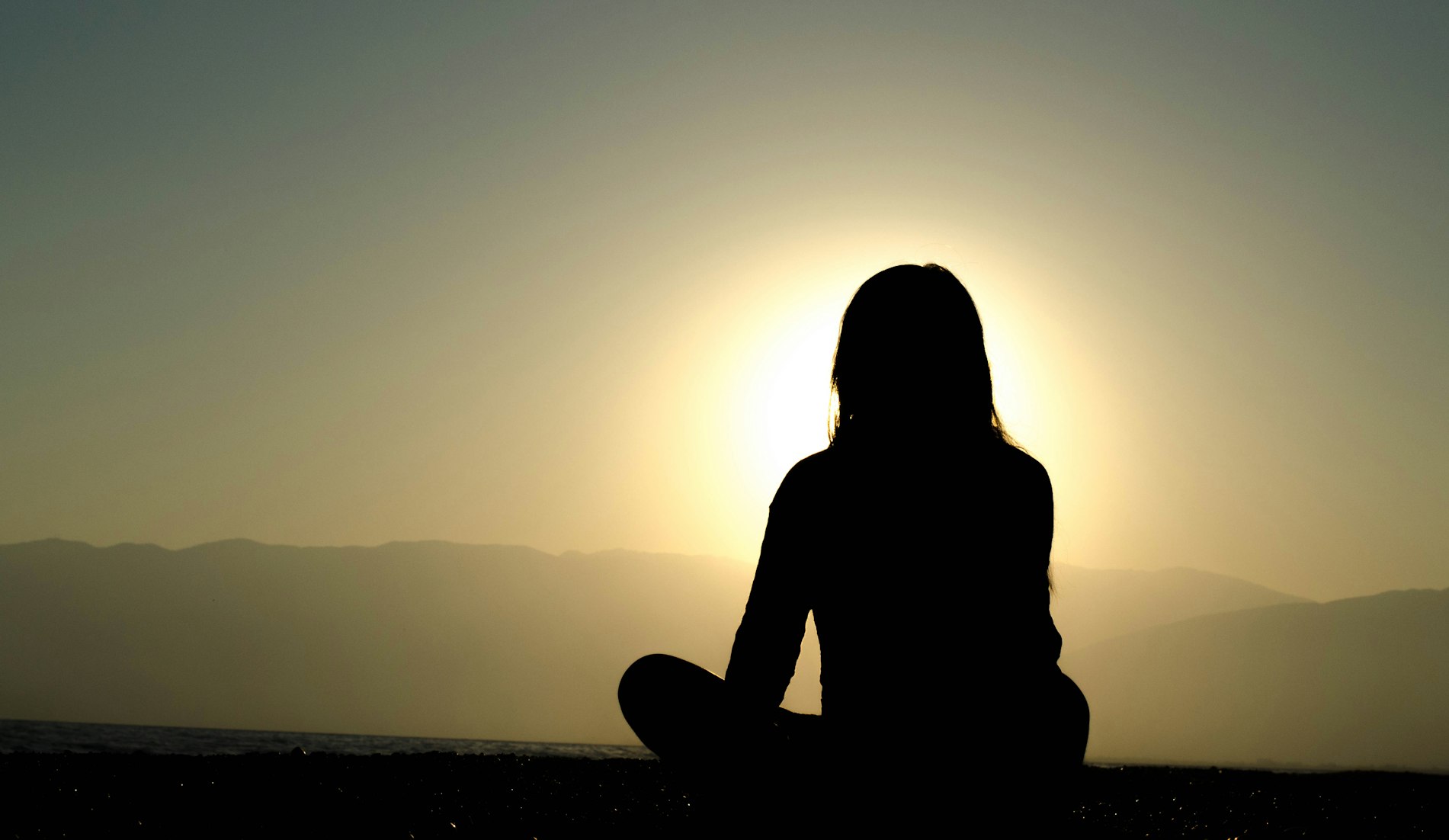
Photo by Dingzeyu Li on Unsplash
Meditation and Nature Connection
Wicca is often nature-centred.
That means meditation does not have to happen indoors with closed eyes. It can happen under a tree, beside water, in a garden, near a window during rain, under moonlight, or while walking slowly through a quiet place.
This seasonal focus is one reason meditation fits Wicca so well. It helps practitioners pay attention to what nature is actually doing.
Not what they imagine nature is doing. What it is doing.
The difference matters.
A Wiccan might meditate on the first signs of spring, the heat of midsummer, the smell of wet soil, the bare branches of winter, the dark moon, the full moon, the wind, the sea, or a single plant growing through a crack in stone.
That kind of meditation can teach humility. Nature is not just a symbol shelf for humans. It is alive, dangerous, beautiful, indifferent, generous, and harsh.
Wicca is at its best when it pays attention to real nature, not just pretty nature.
Meditation and the Wheel of the Year
The Wheel of the Year is the cycle of seasonal festivals marked by many Wiccans and modern Pagans. It is commonly linked with eight sabbats, including Samhain, Yule, Imbolc, Ostara, Beltane, Litha, Lammas or Lughnasadh, and Mabon.
Meditation can deepen these festivals.
At Samhain, a Wiccan may meditate on death, ancestors, endings, and memory. At Yule, they may focus on darkness, hope, and the return of light. At Imbolc, they may reflect on cleansing, renewal, and the first stirrings of spring. At Beltane, they may meditate on desire, life force, creativity, and union. At Lammas, they may consider harvest, labour, sacrifice, and gratitude.
This is not abstract. Seasonal meditation helps a person feel the year in the body.
That matters because Wicca is not meant to be a religion of words alone. It is a religion of practice, ritual, senses, timing, and repeated contact with natural cycles.
A person who marks every sabbat but never pays attention to the season may be doing pageantry more than religion.
Meditation helps correct that.
Meditation and the Goddess and God
Some Wiccans use meditation to connect with the Goddess and God.
In many forms of Wicca, the Goddess and the God are central figures. They may be understood as literal divine beings, as faces of many deities, as powers within nature, as symbols, or as ritual forms. Wiccan theology varies, so meditation with deity also varies.
A Wiccan may sit quietly before a Goddess image. They may visualise a moonlit landscape, a forest, a cave, a temple, a shore, a field, or another symbolic meeting place. They may ask for guidance. They may listen. They may meditate on a myth, a divine name, an image, or a feeling.
This can be devotional. It can be symbolic. It can be psychological. It can be mystical. Often, it is mixed.
That mix is normal in Wicca.
What matters is respect. Deity meditation should not be treated like casual fantasy. Nor should every image in the mind be treated as a divine command. People can misread themselves very easily.
A serious Wiccan approach needs balance: listen, record, reflect, and do not surrender common sense.
Meditation and Visualisation
Visualisation is a major skill in many forms of Wiccan practice.
A Wiccan may visualise a circle forming around them. They may picture roots growing from their body into the earth. They may imagine protective light around a person or home. They may picture energy rising, gathering, moving, or being released. They may focus on a spell goal as clearly as possible.
Meditation helps build that skill.
Many people assume visualisation means seeing a perfect image in the mind, like a film. It does not. Some people see clear mental pictures. Others feel, hear, sense, or know rather than see. That is fine.
The real skill is holding attention steady.
Can you stay with the image, feeling, word, or intention long enough for it to matter? Can you return to it when your mind wanders? Can you notice when you have drifted into fantasy, worry, or self-flattery?
Meditation helps with all of that.
Without focus, visualisation becomes daydreaming. With focus, it becomes a tool.
Meditation and Spellwork
Meditation can support spellwork in several ways.
First, it clarifies intention. Before casting a spell, a Wiccan may meditate on what they actually want, why they want it, and whether magic is the right response.
Second, it helps regulate emotion. Anger, fear, envy, and desperation can all feed spellwork, but they can also distort it. Meditation gives the practitioner a chance to notice those emotions rather than be ruled by them.
Third, it supports ethical reflection. The Wiccan Rede is one of Wicca’s best-known ethical statements, often linked with avoiding harm, though Wiccans interpret it in different ways.
Fourth, meditation helps a person release the working afterwards. This is overlooked. Some people cast a spell, then obsess over it for days. That obsession can become anxiety dressed as magic. Meditation can help a practitioner act, release, and return to ordinary life.
Spellwork needs desire, but it also needs discipline.
Meditation gives desire a spine.
Meditation and Energy Work
Some Wiccans speak about energy.
They may talk about raising energy, sensing energy, grounding energy, directing energy, or releasing energy into a spell. Others may dislike the word or understand it in a more symbolic or psychological way.
That variety is fine. The practice can still be useful.
Meditation helps people notice subtle shifts in the body: warmth, tension, breath, tingling, pressure, emotion, tiredness, excitement, calm, or fear. A spiritual Wiccan may understand these as energy. A more psychological Wiccan may understand them as body awareness and focused attention. A symbolic practitioner may use the language because it works ritually.
In each case, meditation helps.
Breathing slowly, sitting still, chanting, swaying, visualising light, focusing on the hands, or feeling the body’s weight can all build awareness. That awareness makes ritual less mechanical.
It also helps stop people from making wild claims. Not every shiver is cosmic power. Not every mood is a message. Not every intense feeling is proof that a spell has worked.
Meditation can make a practitioner more sensitive, but it should also make them less gullible.
Meditation and Divination
Meditation is useful before divination.
Tarot, runes, pendulums, scrying, ogham, and other forms of divination all involve interpretation. Interpretation can be messy. The mind brings fear, hope, bias, memory, and projection to the reading.
A short meditation before divination can help quiet the noise.
It may be as simple as breathing slowly, stating the question clearly, and letting the body settle. That pause can stop the practitioner from grabbing at the answer they want.
Meditation after divination can be just as useful. It gives time to process the symbols without panic. A tarot card is not a court sentence. A rune is not an excuse to abandon responsibility. A scrying image is not automatically truth.
This is important. Divination can help people think, reflect, and notice patterns. It can also feed anxiety if handled badly.
Meditation gives divination a calmer frame.
Meditation, Shadow Work, and Self-Knowledge
Some Wiccans use meditation for shadow work.
Shadow work means facing hidden fears, wounds, habits, reactions, and motives. It is not a game. It is not a witchy buzzword. It can be uncomfortable because it asks a person to stop lying to themselves.
Meditation can help because it teaches observation.
A person may sit quietly and notice anger under politeness, fear under control, grief under numbness, envy under judgement, or a need for power under “helpful” magic. That can be unpleasant. It can also be liberating.
But there is a serious warning here: meditation is not a replacement for therapy, medical care, trauma support, or mental health support.
Some inner work can bring up difficult memories or feelings. People with trauma, anxiety, depression, dissociation, psychosis, or other mental health concerns should use care and seek proper support when needed. A coven leader, tarot reader, or online witch is not a substitute for qualified help.
Spiritual practice should support mental health, not pretend to replace it.
Meditation in Coven Practice
Covens may use meditation in group ritual.
This might include guided visualisation, shared silence, trance work, elemental meditation, deity meditation, pathworking, breathing together, or quiet preparation before a rite. Group ritual has played a major role in many forms of Wiccan practice, especially in initiatory covens.
Group meditation can be powerful because it builds shared focus. Everyone enters the rite together. Everyone slows down. Everyone listens. The group becomes less like a set of separate individuals and more like a working circle.
That can be beautiful.
It can also be risky if handled badly. Deep guided meditation can stir strong emotions. Trance work can make people feel exposed. Deity work can be intense. Good covens should respect consent, boundaries, and emotional safety.
No one should be pressured into inner work they are not ready for. No leader should use meditation to control people, create fear, or claim special access to someone else’s mind or soul.
A coven without boundaries is not spiritual. It is unsafe.

Photo by Alexey Demidov on Unsplash
Meditation for Solitary Wiccans
Meditation can be especially helpful for solitary Wiccans.
A solitary practitioner does not have a coven leader guiding the structure. They may not have group ritual to carry them. They may need to build rhythm, focus, and discipline on their own.
Meditation helps with that.
It gives a clear practice that can be done without expensive tools. No altar is required. No special clothing. No rare herbs. No perfect room. Just time, attention, and honesty.
A solitary Wiccan may meditate daily, weekly, at the full moon, before sabbats, before spellwork, or whenever they feel spiritually disconnected. They may keep a journal afterwards, noting images, moods, questions, dreams, symbols, or patterns.
That journal matters. It stops practice from becoming vague. Over time, the practitioner can see what repeats. Which symbols return? Which meditations help? Which ones disturb? Which insights lead to real change?
Solitary Wicca needs self-trust, but self-trust should be earned through practice. Meditation helps build it.
Different Types of Wiccan Meditation
There is no single Wiccan meditation method.
Wiccans often adapt meditation to their own path, tradition, and temperament. Some common forms include breath meditation, grounding meditation, elemental meditation, moon meditation, seasonal meditation, deity meditation, guided visualisation, walking meditation, candle meditation, and trance-style meditation.
Breath meditation is simple. The practitioner focuses on breathing and returns attention when the mind wanders.
Grounding meditation may involve imagining roots, feeling the body’s weight, or sensing connection with the earth.
Elemental meditation focuses on earth, air, fire, water, or spirit. A person may meditate on a stone, flame, bowl of water, incense smoke, or open sky.
Moon meditation may follow lunar phases. The new moon may be used for stillness and beginnings. The full moon may be used for fullness, clarity, or magical power.
Seasonal meditation follows the year. It can connect with sabbats, weather, plants, harvest, darkness, and light.
Deity meditation focuses on the Goddess, God, or other divine figures.
Candle meditation uses a flame as the focus. This can be very effective, but basic fire safety matters. A spiritual mood is no excuse for burning the house down.
Walking meditation can suit Wiccans who struggle to sit still. Slow walking in nature can be just as serious as sitting at an altar.
The method matters less than the quality of attention.
Is Meditation Required in Wicca?
Meditation is not universally required in every form of Wicca.
Some Wiccans meditate every day. Some use meditation mainly before ritual. Some prefer trance, chanting, dance, prayer, walking, gardening, or direct magical work. Some rarely meditate at all.
Wicca is practical and varied. It does not have one global checklist that every Wiccan must follow.
But even if meditation is not required, it is one of the most useful skills a Wiccan can develop.
Why? Because it improves almost everything else.
It improves ritual focus. It improves spellwork. It improves divination. It improves emotional control. It improves self-awareness. It improves patience. It improves the ability to tell the difference between intuition and impulse.
That last one is vital.
A lot of people confuse intuition with whatever they strongly feel in the moment. Meditation can help separate signal from noise. Not perfectly, but enough to matter.
“Meditation Means Emptying the Mind Completely”
This is one of the most common misunderstandings.
Meditation does not have to mean making the mind blank. For most people, that is not realistic anyway. The mind thinks. That is what it does.
Meditation usually means noticing thoughts without being dragged around by them. It may mean focusing on the breath, a candle, a sound, a deity image, a tree, a phrase, or a ritual intention. When thoughts wander, the practitioner returns.
That return is the practice.
A beginner who gets distracted fifty times and returns fifty times has not failed. They have meditated fifty times.
This point matters because many people quit too early. They sit down, notice mental noise, and decide they are bad at meditation. They are not. They are just seeing the noise clearly for the first time.
“Meditation Is Only Eastern, Not Wiccan”
This is too simple.
Many modern meditation methods in the West have been influenced by Hindu, Buddhist, and other Asian traditions. That should be acknowledged honestly. People should not pretend every meditation method came from Wicca.
But silence, contemplation, trance, breath, prayer, vision, and focused attention are not owned by one culture. Wiccans may use meditation in Wiccan ways: before ritual, in circle, with the elements, with seasonal festivals, with deity, with spellwork, and with nature.
The key is respect.
Borrowing blindly is lazy. Treating every practice as interchangeable is worse. But using stillness, breath, and focused attention as part of Wiccan ritual is completely natural.
Wicca has always drawn from several sources. The question is whether those sources are handled with honesty and care.
“Meditation Automatically Makes Magic Stronger”
Not automatically.
Meditation can improve focus. It can sharpen intention. It can steady emotion. It can make ritual feel deeper and more controlled. All of that can support magic.
But meditation does not guarantee results.
A calm person can still cast a foolish spell. A focused person can still be wrong. A beautiful visualisation does not force reality to obey. Magic, in any serious sense, still requires judgement, timing, ethics, practical action, and humility.
This is where some modern witchcraft talk becomes silly. It treats focus as if it were a remote control for the universe. It is not.
Meditation is a tool. A strong tool, yes, but still a tool.
“Meditation Is Always Safe and Relaxing”
No.
Meditation is often calming, but not always. Sitting quietly can bring up grief, fear, anger, shame, old memories, or uncomfortable truths. Trance-style practice can feel disorientating. Deep visualisation can affect people strongly.
That does not mean meditation is bad. It means it should be approached with common sense.
Start gently. Stop when needed. Ground afterwards. Eat something. Talk to someone trusted if difficult feelings come up. Seek qualified support for serious mental health concerns.
Wicca should not glorify pushing through distress for the sake of looking powerful. That is nonsense.
A wise practitioner knows when to pause.
Why Meditation Matters in Wicca
Meditation matters because Wicca is not just an aesthetic.
The candles, jewellery, herbs, symbols, and altar tools can be meaningful. They can also become empty props. Meditation cuts through that problem because it asks for real attention.
No audience. No performance. No posturing.
Just the practitioner and the practice.
This is why meditation is so valuable in Wicca. It builds discipline. It teaches emotional honesty. It prepares the mind for ritual. It helps with grounding. It deepens nature connection. It supports deity work. It makes spellwork less impulsive. It gives divination a steadier base.
Without focus, witchcraft becomes performance. Meditation helps turn it back into craft.
That is the blunt truth.
Final Answer: What Role Does Meditation Play in Wicca?
Meditation helps Wiccans focus, ground, prepare for ritual, connect with nature, work with deity, support spellwork, approach divination more calmly, and understand themselves more honestly.
It is not required in every form of Wicca. Some Wiccans practise it daily. Some use it only before ritual. Some rarely use the word at all. But as a skill, it is one of the most useful parts of Wiccan practice.
Meditation in Wicca is not about escaping the world. It is about meeting the world with clearer attention.
That is why it matters.
Whether meditation is part of your daily practice, your altar routine, or your private Wiccan path, our occult jewellery, occult necklaces, and gothic pins are simple ways to carry that symbolism with you.