Skip to content

What Tools Do Wiccans Use in Rituals?
Wiccans use ritual tools to focus attention, set boundaries, and keep a rite moving - not because the objects are “magic batteries”, but because they help you concentrate and repeat a pattern that works. Most Wiccan setups boil down to simple stand-ins for the elements, plus a few classic tools like a cup, a blade (or substitute), and something to burn a candle safely.
Key points
- Wiccan tools are props with a job: they help you focus, mark the circle, and stay consistent.
- The best-known tools are the athame, wand, chalice, pentacle, and cauldron, but plenty of Wiccans swap them out or go without.
- In real homes, practicality wins: fire safety, smoke alarms, kids, pets, and housemates all matter.
- If a tool makes ritual feel awkward or performative, bin the guilt and simplify.
What “ritual tools” mean in Wicca
Ritual tools in Wicca are objects you use to shift from everyday mode into ritual mode. They give your hands something to do and your mind something to follow. If you have ever tried to “just meditate” and ended up thinking about washing up, you already understand why tools help.
Tools are also a language. A bowl of water is not just hydration on a table - it signals a whole set of ideas (emotion, cleansing, blessing, flow). If you want the wider context of how Wiccans frame this, it helps to read How Do Wiccans Define Magic?
My view: tools are useful when they stop you hesitating. They’re pointless when they turn into clutter you’re scared to touch.
Why Wiccans use tools at all
Tools do three things well.
They lock in focus. Lighting a candle, ringing a bell, sprinkling salt - it’s a clean “start signal”. They carry symbolism, which is why a lot of Wicca leans heavily on signs and repeated shapes. And they create structure: opening, calling, raising energy, offering, closing.
If you like the symbolism side, How Do Occultists Use Symbolism in Their Rituals? gives a good mental model for why objects matter even when you’re not claiming they shoot lightning.
The usual altar setup
An altar is just a working surface. Table, shelf, windowsill, a box you put away after. The internet loves a dramatic altar. Real life often prefers “small, tidy, and not a fire hazard”.
Common basics:
- A candle (or two)
- A bowl of water
- A pinch bowl of salt
- A plate or dish for offerings
- Something for air (incense, a feather, a bell)
- Matches or a lighter
If you want to picture how these pieces show up in an actual rite, What Happens During a Wiccan Ritual? is a handy companion.

Photo by Monstera Production: https://www.pexels.com/photo/burning-candles-standing-on-a-table-with-flowers-crystals-and-other-decorations-20431432/
The four elements and how tools often represent them
Wicca often organises rituals around earth, air, fire, and water (sometimes with spirit added). Tools become “element markers” on the altar.
Typical pairings:
- Air: incense, feather, bell
- Fire: candle, lantern
- Water: chalice or bowl
- Earth: salt, stone, pentacle tile
Some traditions swap which tool “belongs” to which element, and that’s fine. The point is the system, not the spreadsheet. For a deeper breakdown, see What Is the Role of the Elements in Wicca?
In my opinion, if you keep arguing with yourself about correspondences, you’re missing the point. Pick a set, stick with it, and get on with the ritual.
The athame
The athame is the ritual dagger. In a lot of Wiccan practice it’s used to direct energy, trace the circle, and mark boundaries - not to physically cut things. That “it’s symbolic, not a weapon” point gets repeated for a reason, because it’s where outsiders often get the wrong idea.
If you want the symbol side of it, What are some common symbols in Wicca? covers the athame and other staples.
My take: if you have kids at home, maybe don’t use a knife. Use a wand, a finger, or a simple gesture. Nobody hands out points for having the right knife.
The wand
A wand does a similar “direction” job, but with a different feel. Many people use it for blessing, invocation, and anything they want to feel calmer and less sharp than a blade-led working.
Wands can be fancy or they can be a smooth stick you found on a walk and cleaned up. The only real test is whether you actually use it. A wand you love and use beats an expensive one you’re scared to scuff.
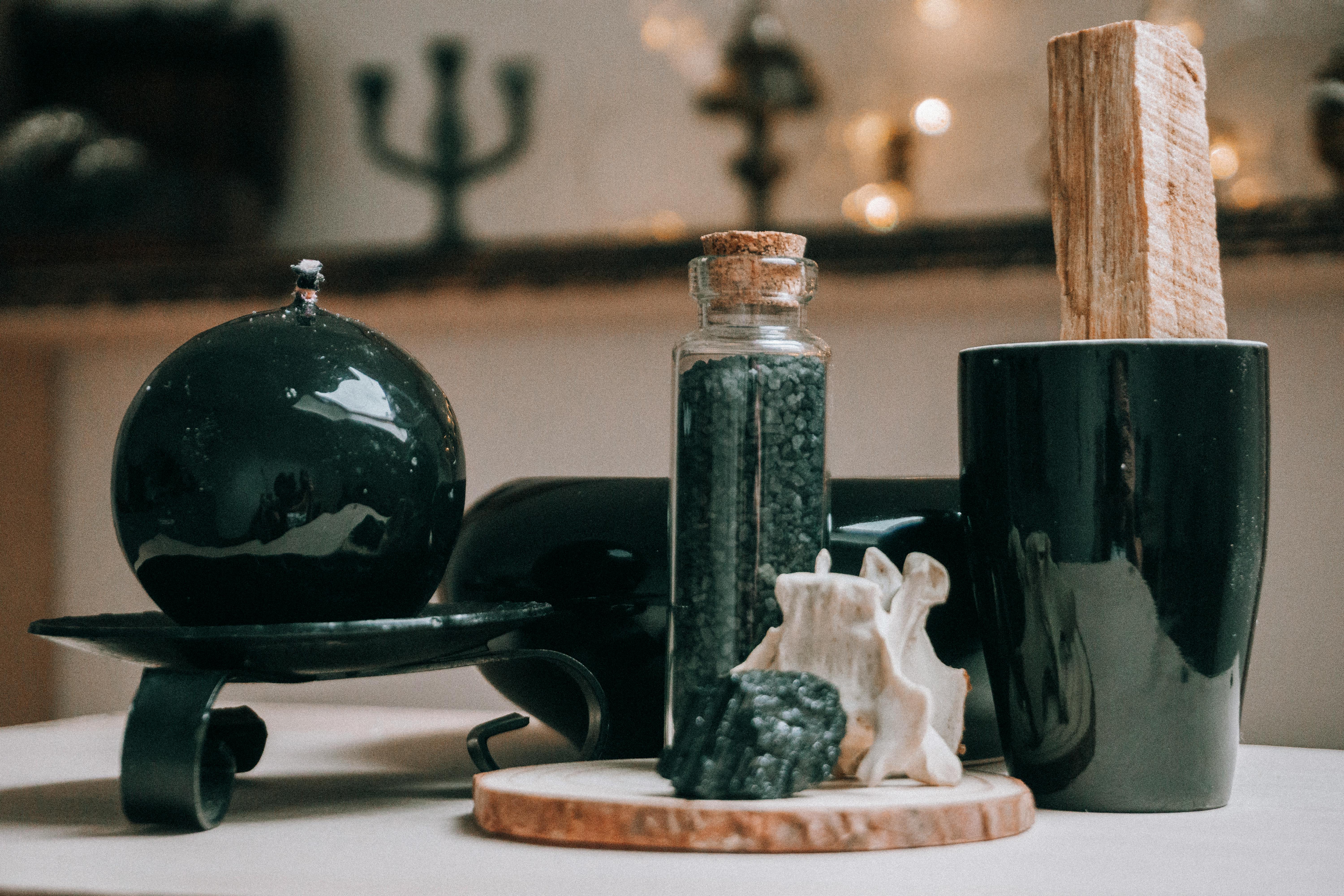
Photo by Alina Vilchenko: https://www.pexels.com/photo/ceramic-glass-with-wooden-stick-composed-with-sparkling-black-sphere-7581822/
The chalice
The chalice is the ritual cup, often tied to water, blessing, and offering. It might hold wine, juice, or plain water. In group rites, it can also represent sharing and communion.
Practical note: shared cups aren’t always a great plan. Separate cups keep the symbolism without the germs.
The pentacle or altar tile
A pentacle is usually a disc or plate used as a working surface for charging items, grounding, and centring the altar. Many are marked with a pentagram, but they don’t have to be.
If you want to avoid misunderstandings, a plain tile does the job without broadcasting anything. If you want to understand the symbols properly, What are some common symbols in Wicca? is the place to start.
I don’t pick symbols for shock value. I think you should pick them because they mean something to you.
The boline or working knife
The boline (or working knife) is the cutter: herbs, cord, carving candles, trimming things. The value is in the separation of roles. One tool is for symbolic direction, the other is for practical jobs.
If you only own one knife and it’s your kitchen knife, that’s still fine. Just be clear about what you’re using it for, and keep it clean.
The cauldron
The cauldron is popular because it’s useful. It can hold burning charcoal for resins, contain small fires, mix offerings, or act as a central working bowl.
Safety matters here. Sand in the bottom, heatproof surface, good ventilation, and never leaving it unattended. Boring advice, but it prevents the kind of mistake you only make once.
Incense tools and smoke-free alternatives
Incense is often used for cleansing, atmosphere, and air element work. Resin incense needs charcoal and a heat-safe burner. Stick incense is simpler, but it still sets off alarms in plenty of UK flats.
If smoke is a problem:
- Use a bell or chime for “clearing”
- Use a light mist spray (water-based, pet-safe choices, and don’t overdo oils)
- Use a simmer pot in the kitchen before ritual, then work in the fresh space
Tip: if incense gives you a headache, stop treating suffering like a requirement, and ditch the joss sticks!
Candles and candle holders
Candles are everywhere because flame is immediate and symbolic. Colour meanings exist, but they vary from book to book, so don’t treat them like law.
Basic candle common sense:
- Stable holder, away from curtains
- No loose sleeves near flame
- If you add herbs or oils, keep the flame small and keep watch
If you need a broader look at where candles fit in the flow of ritual, revisit What Happens During a Wiccan Ritual?
Herbs, oils, and a mortar and pestle
Herbs show up as offerings, blends, altar dressing, baths, or simple cleansing. A mortar and pestle is handy for grinding dried herbs and mixing small quantities.
My practical advice: pick herbs you’ll also use in cooking (rosemary, thyme, bay, cinnamon). It keeps your cupboard useful and stops witchcraft turning into a pile of half-used jars.
Crystals and stones
Crystals are common in modern practice. Some people treat them spiritually, some treat them as symbolic focus objects. Either way, they can work as a physical reminder of what you’re trying to do.
If crystals help you concentrate, they’re doing their job. If you feel pressured to buy them, skip them.

Photo by Pavel Danilyuk: https://www.pexels.com/photo/close-up-shot-of-fortune-telling-objects-7221573/
Divination tools used around ritual
Tarot, oracle cards, runes, pendulums, scrying bowls - lots of Wiccans use divination before or after a rite for guidance and reflection.
A healthy boundary is to use divination to ask “what should I notice?” rather than “tell me what to do.” That keeps it grounded and avoids the spiral where every decision needs a card pull.
The Book of Shadows and written tools
A Book of Shadows is your working record: rituals you ran, what you used, what happened, what you learned. It can be neat or messy. The value is in the tracking.
If you want a direct answer to the common misconception, Is the Book of Shadows the Wiccan Holy Book? clears it up nicely.
Make it readable and useful. If you write like you’re performing for an invisible audience, you’ll stop writing.
Bells, chimes, and sound tools
Sound tools are simple and effective. Bells can mark transitions and help “clear” a space without smoke. Drums and rattles can raise energy fast, especially in group work.
If you’re in a small home with sensitive smoke alarms, a bell is an absolute winner as an alternative.
The besom
The besom is the ritual broom. Sometimes it’s symbolic sweeping. Sometimes it’s just cleaning.
My blunt opinion: cleaning the space properly does more than half the “energy clearing” people talk about online. A besom can be meaningful, but hoovering still counts!
Cords, knots, and ritual ties
Cord and knot work can be used to bind an intention, mark a commitment, or focus on release.
Don’t use “binding” as a cover for controlling other people. It’s creepy, and it turns spiritual practice into a bad habit.
Offerings and offering dishes
Offerings might be water, wine, bread, fruit, flowers, incense, or a portion of food. They’re a way of giving thanks and keeping reciprocity in mind.
If you offer outdoors, do it responsibly. No litter, nothing that harms wildlife, nothing that leaves a mess for someone else.
Ritual clothing and personal items
Some Wiccans wear robes, some wear jeans, some practise skyclad. Clothing is about comfort and mindset, not a costume competition.
Jewellery and amulets often function as portable reminders of practice. If it helps you stay steady, it’s useful.
Cleansing, consecrating, and storing tools
Cleansing is “resetting” a tool after heavy use. Consecrating is “setting its purpose”. Methods vary: smoke, salt, water, sound, moonlight, wiping, prayer.
Store sharp tools safely. Store oils away from heat and light. Treat fire items like fire items. Respect looks a lot like basic care.
Do you need all these tools
No. You can do a solid, simple Wiccan-style rite with:
- A candle
- A cup or bowl of water
- Salt or a stone
- A bell (or incense if you can use it)
- A notebook
Everything else is optional. If you’re new and want context for how different groups approach this, What Are the Different Traditions of Wicca? helps explain why tool lists vary so much.
Common misunderstandings about Wiccan tools
The big one is thinking tools “do it for you”. They don’t. They help you focus, repeat, and commit.
Another is symbol panic, especially around pentagrams. If you want the seasonal side of why symbols and tools keep repeating through the year, What Is the Wheel of the Year? is a good grounding read.
A quick example of how tools might appear in a simple ritual
You tidy the space and set a small altar. Light a candle. Ring a bell or use incense. Place water and salt on the altar.
Cast your circle by walking the boundary and tracing it with your hand, wand, or athame. Call the elements in your own words. State your intention plainly. Raise energy through breath, stillness, chant, or movement. Make a small offering.
Then thank the elements, close the circle, and ground yourself. Write down what you did and what you noticed. If you like working with lunar timing, What is an Esbat in Wicca? ties this kind of simple ritual into moon practice.
FAQ
Are athames legal to own in the UK?
Kept at home, a ritual knife is usually just “a knife in your house”. The real trouble starts with carrying knives in public, which is tightly restricted and context-dependent. If you want zero hassle, choose a wand or go blade-free please!
Can I practise without knives or fire?
Yes. Use a wand or your hand for directing energy. Use LED candles if needed. Use sound instead of smoke.
What if I’m solitary and have limited space?
Keep a “ritual box” you can pack away: candle, small bowl, salt, bell, notebook. Set up, work, tidy away. Many experienced people do exactly that.
How do I choose my first tools?
Choose what makes you practise more often, not what looks best on a shelf. Start small, then add only what you keep reaching for.
You complement your tools, why not add some satanic jewellery, gothic keyrings or boot charms - you can see all of them in our store!